
Blog – English
Everything You Need to Know About One of the Most Effective Skincare Ingredients

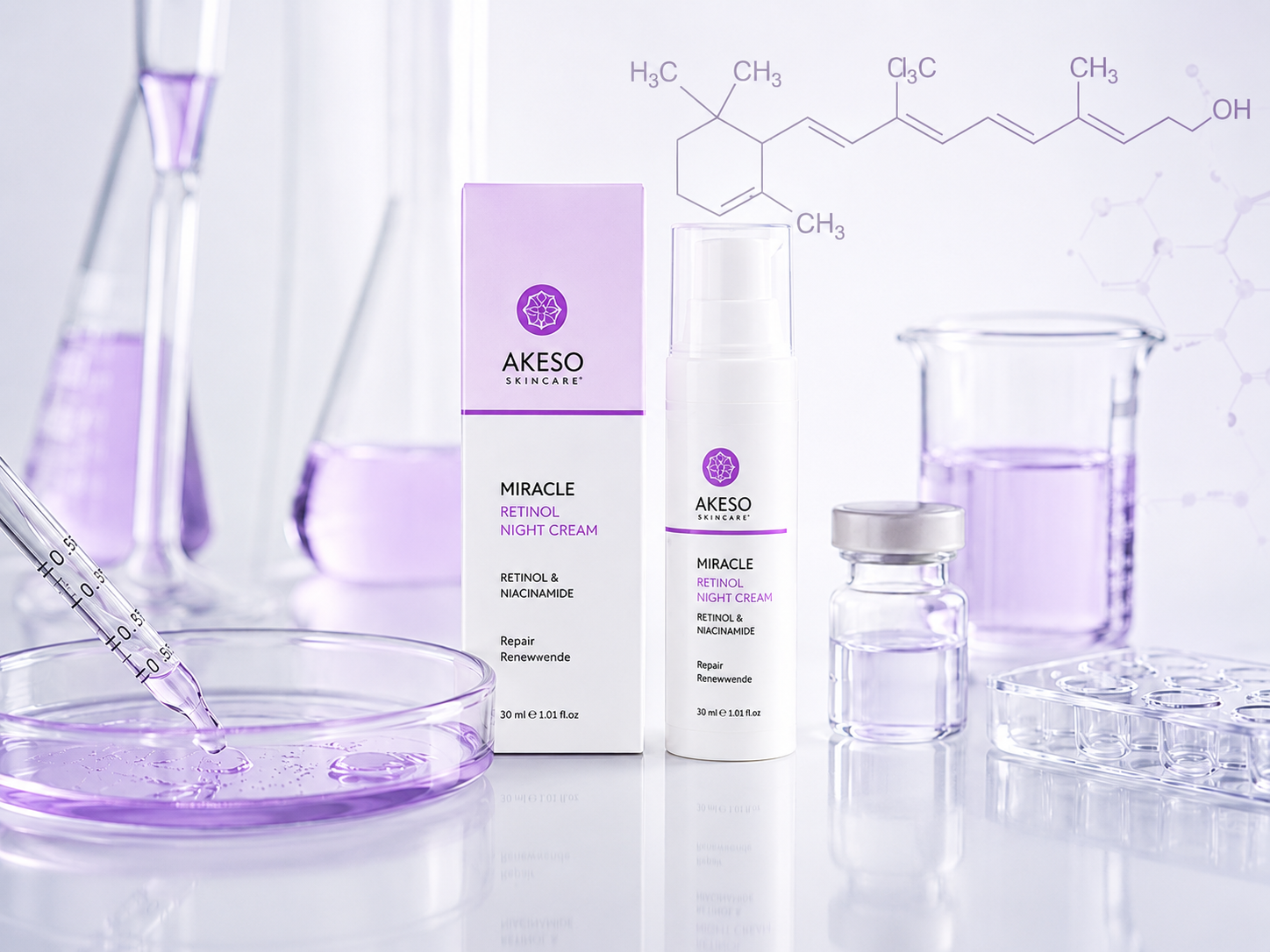
Retinol is one of the most well-known and effective ingredients in skincare. It belongs to the family of retinoids, which are derivatives of vitamin A, and is especially loved for its ability to improve the appearance of the skin, reduce signs of aging, and promote a more even and radiant complexion.
What Is Retinol?
Retinol is an active ingredient that helps support skin renewal and collagen production. In simple terms, it helps the skin look smoother, firmer, and more youthful.
As we age, the skin’s natural cell renewal process slows down. This can lead to a dull appearance, fine lines, uneven texture, and loss of elasticity. Retinol helps support this process, encouraging the skin to renew itself more effectively.
What Are the Benefits of Retinol?
When used correctly, retinol can offer multiple benefits for the skin:
It helps reduce the appearance of fine lines and wrinkles, making the skin look smoother and more rested.
It improves skin texture and tone, giving the complexion a more even appearance.
It helps reduce discoloration and marks, especially when combined with daily sun protection.
It helps regulate oiliness and can support skin that is prone to blemishes.
It enhances the skin’s natural glow, leaving it looking fresher and healthier.
How Should Retinol Be Used Correctly?
Retinol is an ingredient that should be introduced gradually into your skincare routine. It does not need to be used daily from the beginning. On the contrary, the best approach is to start slowly and give the skin time to adjust.
Begin by applying it 1 to 2 times per week, preferably at night, on clean and dry skin. Then, you can gradually increase the frequency depending on your skin’s tolerance.
After applying retinol, it is important to use a moisturizer to support the skin barrier and reduce the possibility of dryness or irritation.
Why Is Sunscreen Essential?
Using sunscreen is essential when using retinol. Retinol can make the skin more sensitive to the sun, which is why daily sun protection is a key step.
Apply sunscreen every morning, even on cloudy days. This helps protect the skin from photoaging, discoloration, and sensitivity, while also helping retinol work more effectively.
What Should You Be Careful About at First?
At the beginning of use, it is normal to experience mild dryness, tightness, or slight irritation, especially if the skin is not used to active ingredients. This does not necessarily mean that the product is not suitable for you, but rather that your skin needs time to adjust.
If irritation is intense or persists, reduce the frequency of use or temporarily stop application. Avoid combining retinol with very strong exfoliating acids or other active ingredients without proper guidance.
If you have very sensitive skin, are pregnant, breastfeeding, or following a dermatological treatment, it is best to consult your dermatologist before starting retinol.
Who Is Retinol Suitable For?
Retinol can suit many skin types, as long as it is used correctly. It is ideal for those who want to address the first signs of aging, dullness, uneven texture, discoloration, or blemish-prone skin.
However, there is no need to rush. Retinol works best when used consistently, patiently, and with the right skin support.
Conclusion
Retinol is a valuable ingredient that can transform the appearance of the skin when used correctly. With gradual introduction into your routine, proper hydration, and daily sun protection, it can become one of the strongest allies for smoother, brighter, and more youthful-looking skin.
The beauty of retinol lies in consistency. It does not offer instant miracles, but over time it can provide visible improvement in the quality and texture of the skin.


